How to keep conference speakers on time (without interrupting them)
By Big Countdown team (Step Solution LLC) · Published October 26, 2026 · 5 min read
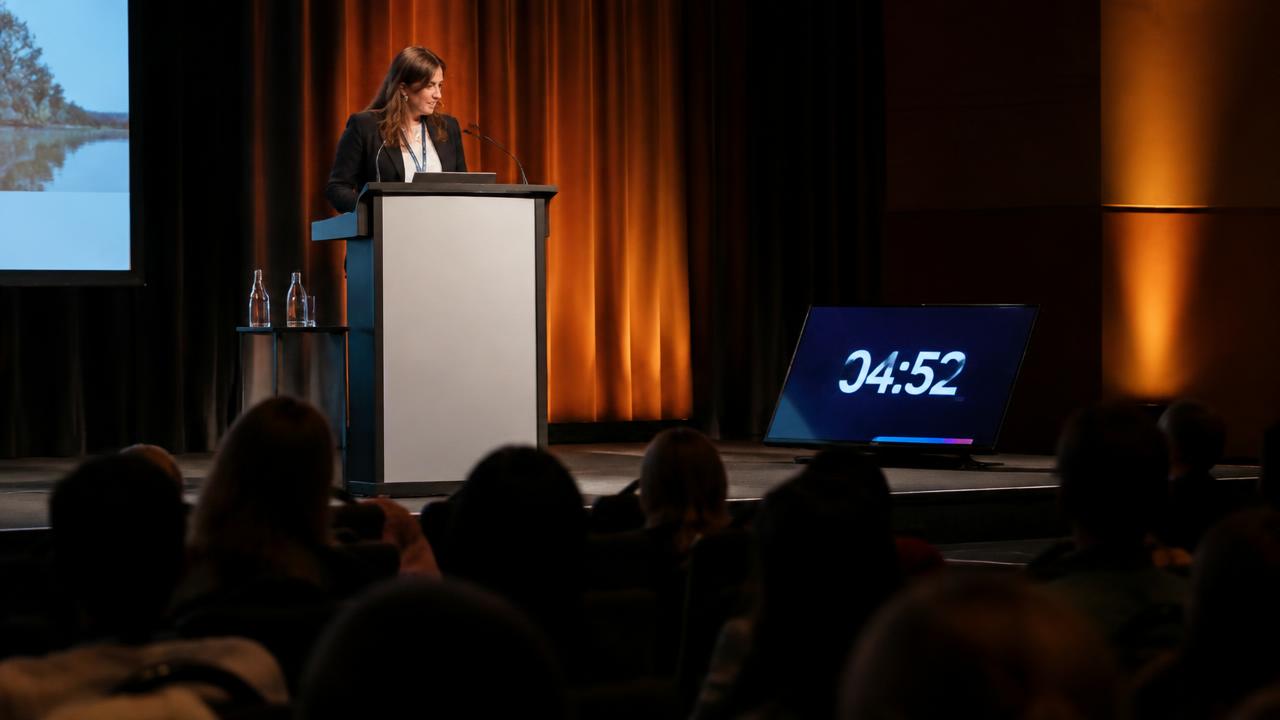
Overrunning sessions are one of the most common problems on event days. One late speaker pushes the coffee break, the next panel and sometimes the venue curfew. The fix is rarely stricter rules — it's giving speakers a clear, calm signal they can trust.
Agree the signals before the show
Most overruns happen because the speaker didn't know how much time was left, or didn't know what the warning meant. Send every speaker one short note before the event: how long their slot is, where the timer will be, and what the warning looks like.
Put the countdown where the speaker looks
A timer on the operator's laptop helps nobody on stage. Show it on a confidence monitor at the foot of the stage, or on a screen the speaker can see without turning around. Large, thin digits are easier to read at a glance than a small clock in a corner.
Choose warning times that match the slot
- Short talks (5–10 minutes): one warning in the final minute is usually enough.
- Standard talks (15–30 minutes): a warning a few minutes out gives time to start wrapping up.
- Panels and Q&A: warn the moderator, not every panellist — they control the close.
Use colour, not interruptions
A screen that turns red when time is almost up is understood instantly, by any speaker in any language, and the audience barely notices. It replaces waving from the side of the stage.
Show-day checklist
- Test the timer on the actual stage screen before doors open.
- Load each session length in advance or know your presets.
- Keep the screen dark between sessions so the audience doesn't stare at an idle clock.
- Brief the stage manager on who resets the timer between speakers.
Drafted with AI assistance, then checked and edited by the Big Countdown team.