Why countdown timers keep audiences engaged (and speakers on time)
By Big Countdown team (Step Solution LLC) · Published November 1, 2026 · 5 min read
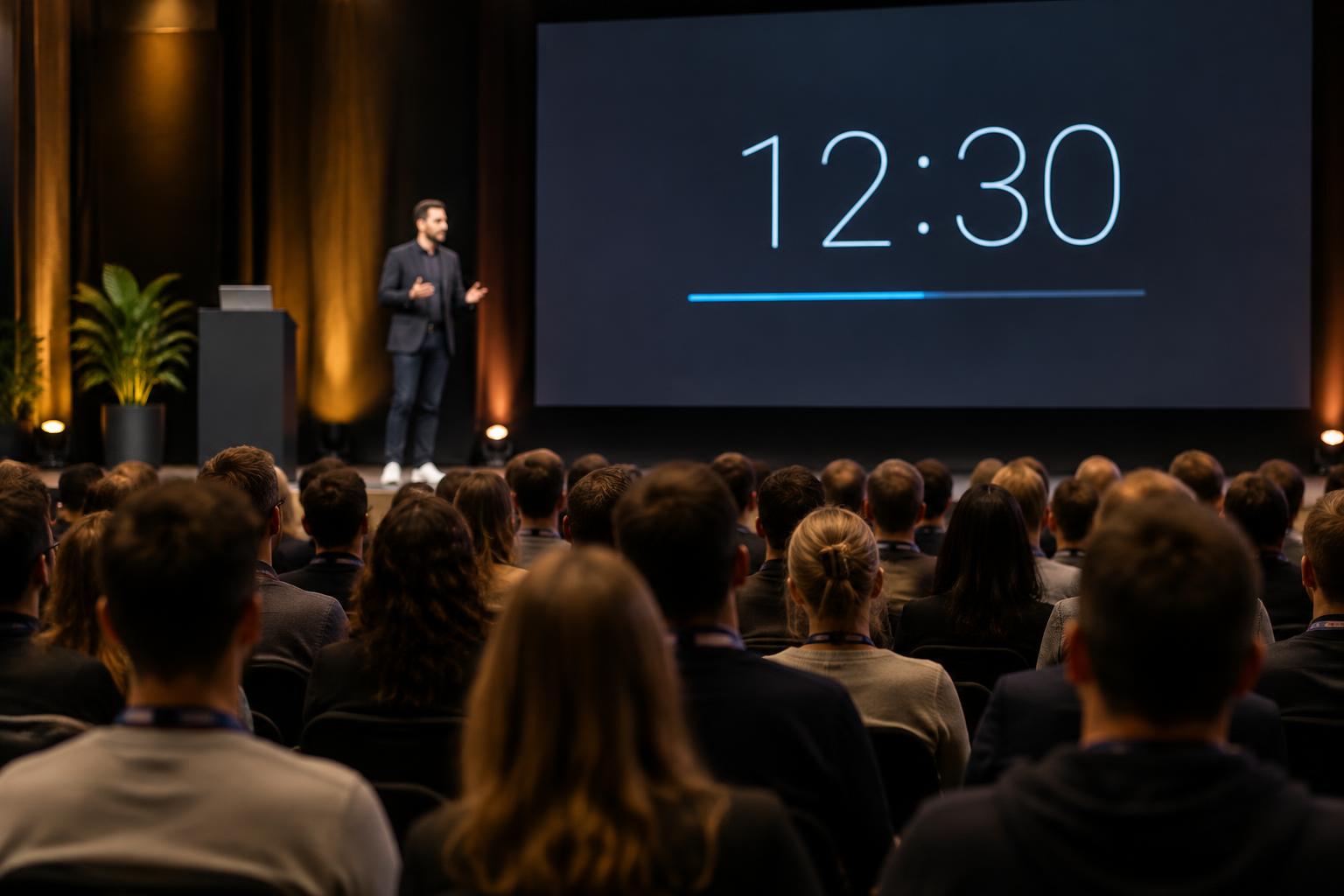
Ask any event crew what quietly ruins a conference and you'll hear the same answer: sessions that drift. A talk planned for 20 minutes runs to 35, the audience gets restless, the next speaker starts late, and by mid-afternoon the whole day is behind schedule. A simple, visible countdown timer is the cheapest fix — and it does more for the audience than most organisers expect.
Attention has a time limit
Audiences don't lose interest because speakers are bad — they lose interest because attention naturally fades when a talk has no clear shape or end point. When listeners can't tell whether a session is nearly done or only half over, they start checking phones and watching the door.
A well-paced talk with a clear finish keeps people with you. The countdown is what makes that pacing possible: the speaker can see exactly how much room is left and lands the ending instead of trailing off.
A timer makes speakers better, not just shorter
Speakers who can see their remaining time make better choices. They skip the weak middle section instead of rushing the conclusion. They leave space for the story they actually wanted to tell. The result isn't a shorter talk — it's a tighter, more confident one.
Without a timer, most speakers genuinely don't know how long they've been talking. Adrenaline distorts time: ten minutes on stage can feel like three.
Why the audience benefits too
- Sessions end when promised, so breaks, networking and lunch actually happen on time.
- Talks stay focused — speakers cut filler when they can see the clock.
- Q&A gets its protected slot instead of being sacrificed to an overrun.
- Energy stays up across the day because no single session drains the room.
What makes a countdown work
- Visible to the speaker, not the audience — a confidence monitor or stage screen the speaker can glance at.
- Big, calm digits — readable from metres away without breaking the speaker's flow.
- A gentle warning — a colour change near the end, understood instantly, no interruptions.
- Consistent rules — every speaker gets the same signals, agreed before the show.
The boring-talk problem
A timer won't fix a dull presentation, but it removes the most common cause of one: a speaker with unlimited time. Constraints force editing. When speakers know they have 18 minutes, they rehearse, cut the second anecdote and get to the point — and audiences can feel the difference.
Try it at your next event
Big Countdown is a browser stage timer built for exactly this: huge readable digits, warning colours, phone remote control and speaker messages. It's free for timers up to 3 minutes with every feature included, so you can test the whole workflow at rehearsal before committing to anything.
Drafted with AI assistance, then checked and edited by the Big Countdown team.